
ITEM NO. 28
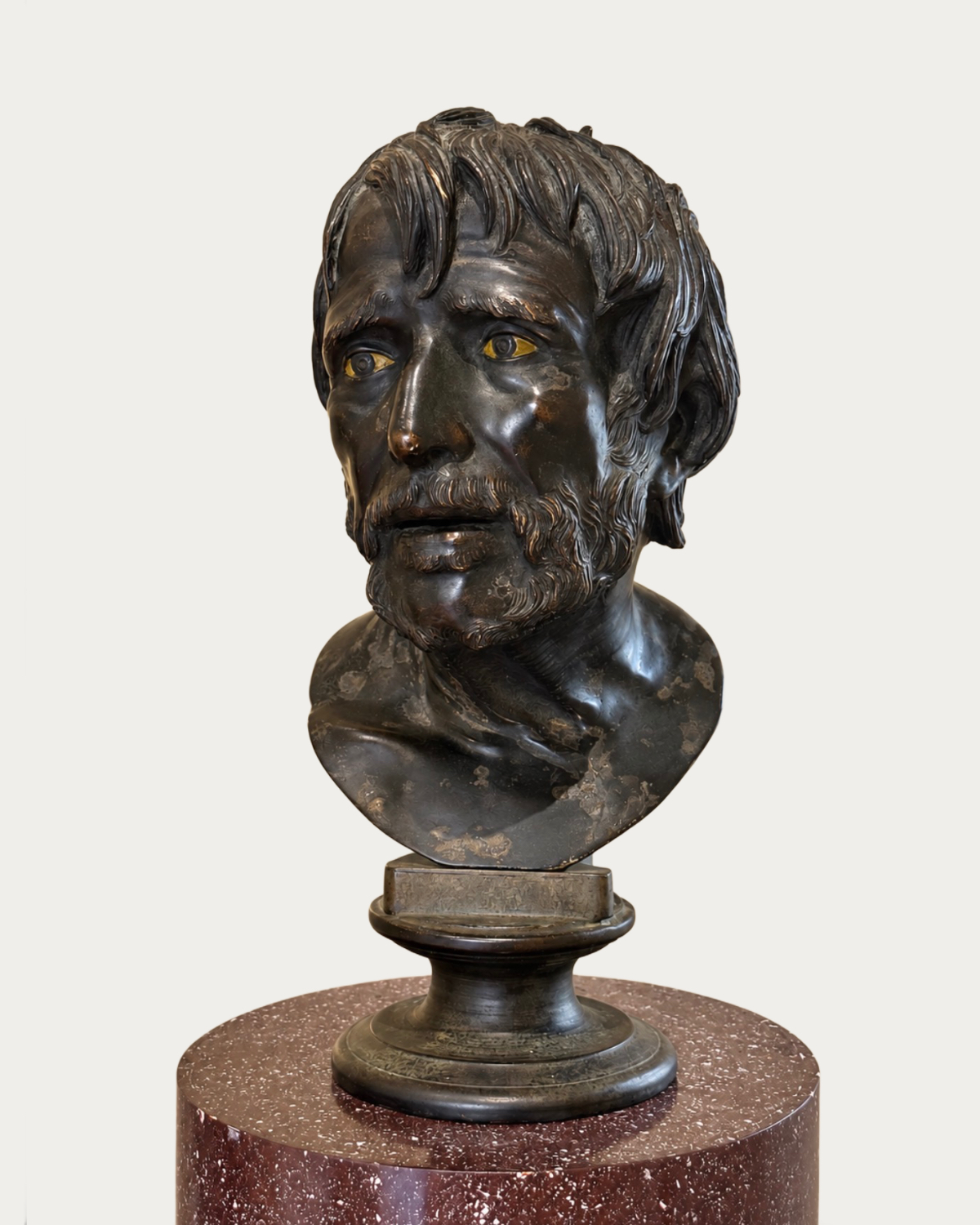
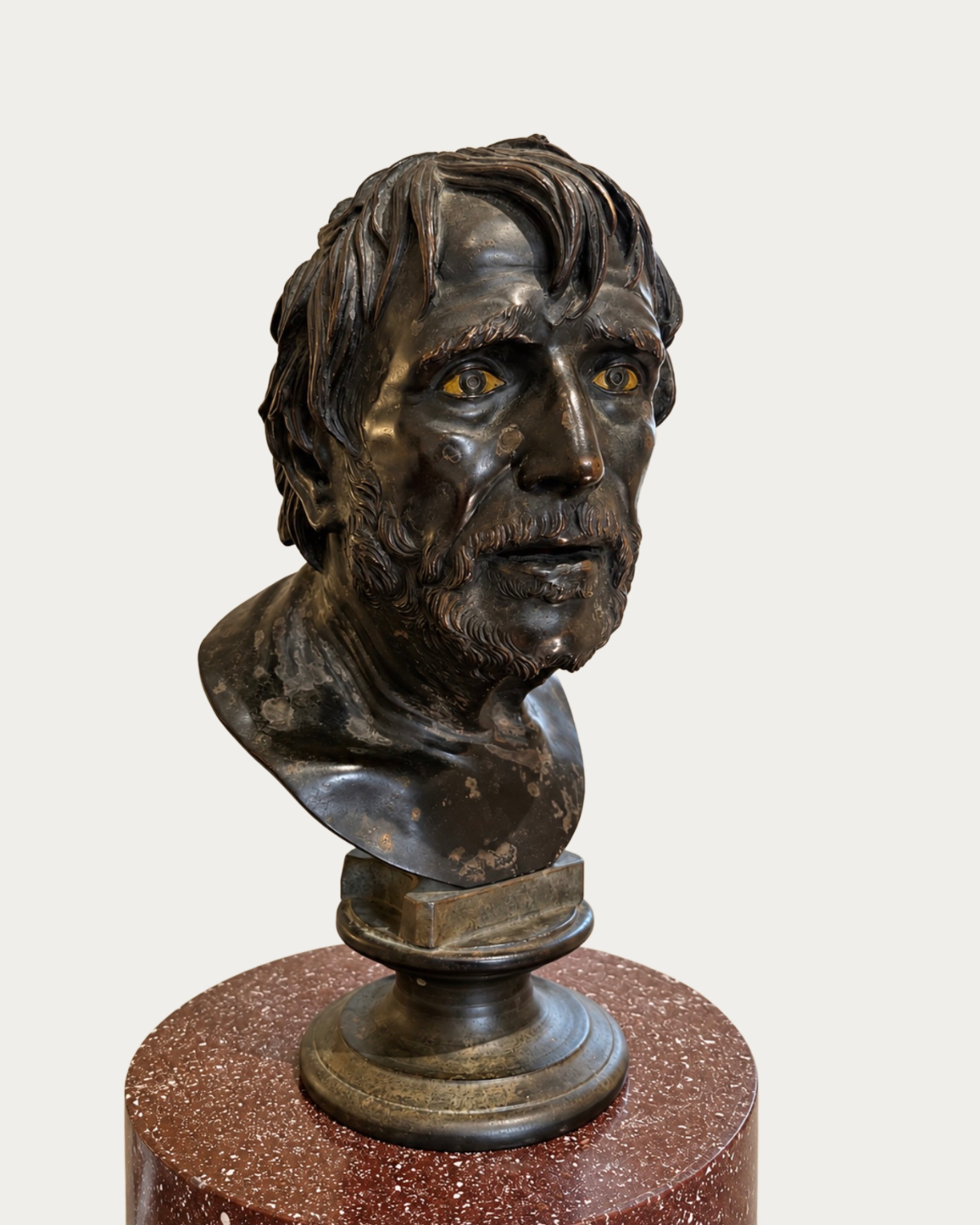
Bust of Pseudo-Seneca in Bronze
Bronze
Late 19th - early 20th century (XIX - XX)
The essence
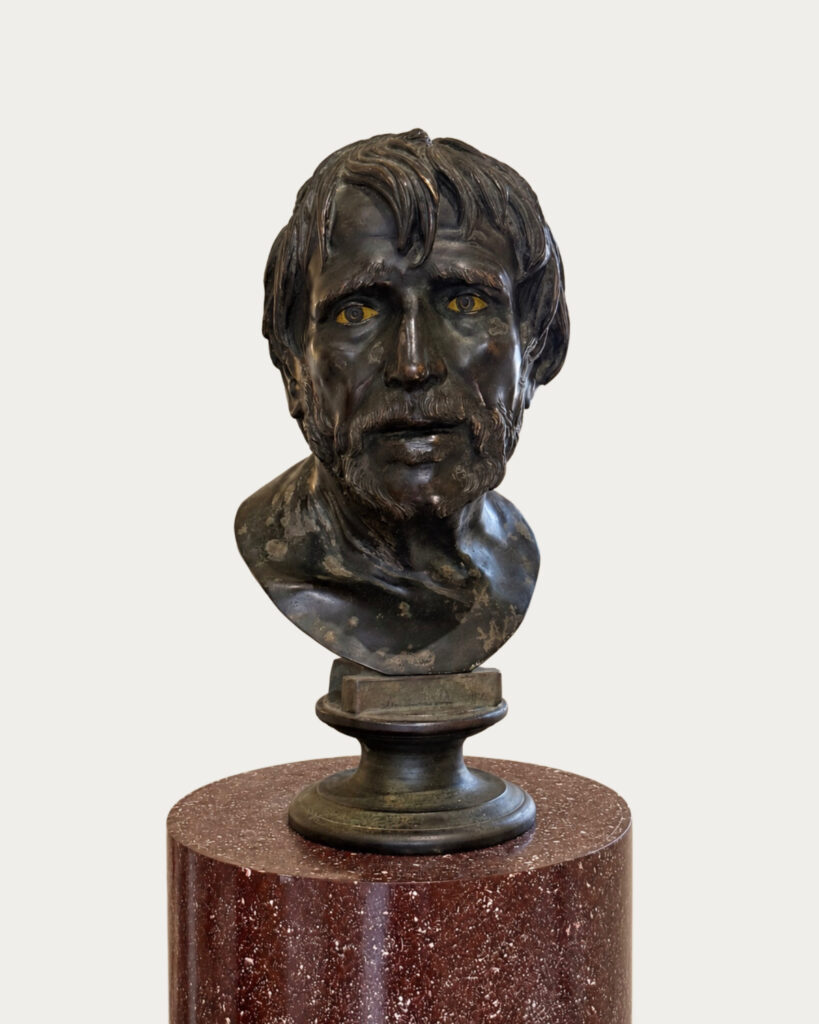
A bronze portrait bust depicting the so-called Pseudo-Seneca, after the celebrated antique type traditionally identified with the Roman Stoic philosopher Seneca.
The identification with Seneca was later rejected following the discovery of an inscribed ancient portrait of the philosopher. The figure is now generally regarded as an unidentified Greek poet or man of letters, derived from a Hellenistic prototype. A celebrated ancient bronze version, discovered at the Villa of the Papyri in Herculaneum, is preserved in the National Archaeological Museum of Naples.
This example retains the striking realism associated with the type: the deeply modelled features, prominent cheekbones, tousled hair and beard, and intense gaze create a vivid and expressive portrait. The subject became particularly admired through the rediscovery of classical antiquity and was frequently reproduced in bronze for collectors during the nineteenth century.
Provenience
- Italian private collection.
Technical specifications
- Period
- Late 19th - early 20th century (XIX - XX)
- Dimensions
- H 46 cm, including base
- Material
- Bronze